


BPC-157: An Exploration Guide for Use
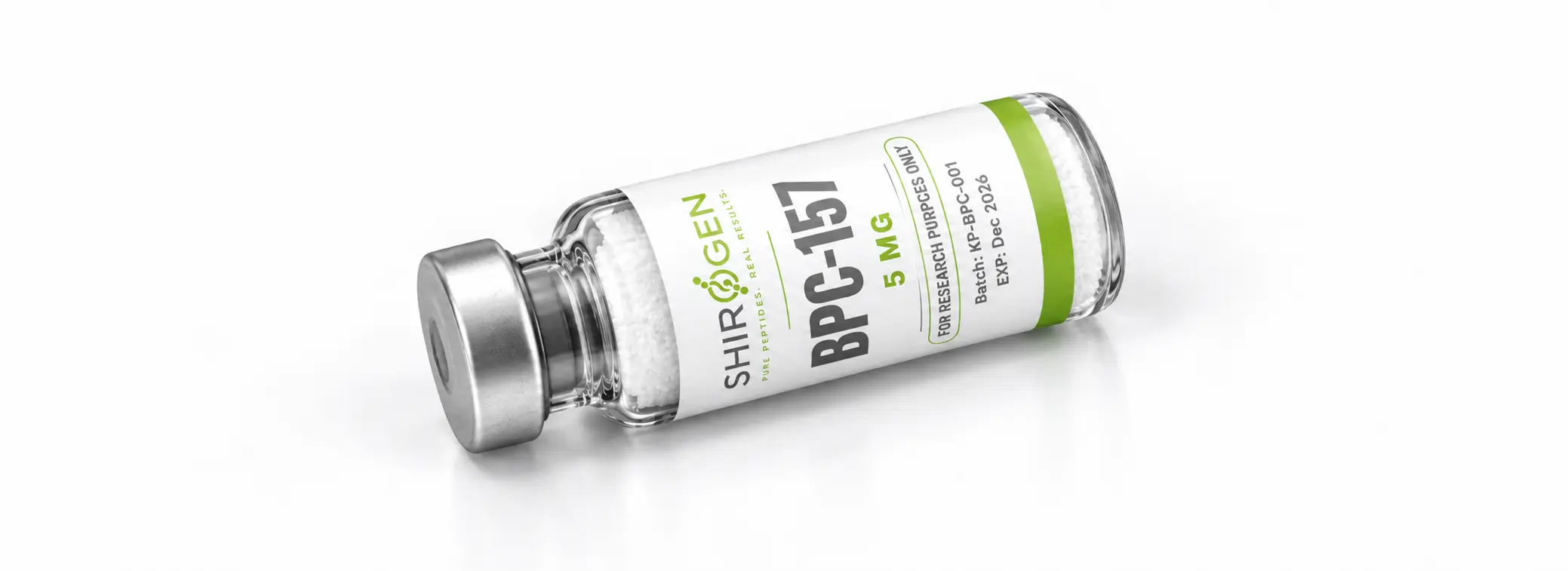
BPC-157 is a synthetic peptide frequently examined in preclinical and laboratory research involving tissue response, cellular signalling, vascular activity, and repair-associated models.
For research teams, however, the compound itself is only part of the equation. Purity, identity verification, storage, reconstitution, and handling all influence the consistency of experimental work.
This guide provides an overview of BPC-157, the research models in which it is studied, and the analytical and handling considerations that matter when working with research-grade material.
What is BPC-157?
BPC-157 is a synthetic pentadecapeptide, meaning it consists of 15 amino acids.
Its sequence is:
GEPPPGKPADDAGLV
The peptide is derived from a partial sequence associated with a gastric protein referred to as Body Protection Compound.
BPC-157 has been investigated in scientific literature across a range of preclinical models, particularly those examining soft tissue, vascular signalling, cellular protection, and tissue-response mechanisms.
For laboratory use, BPC-157 is typically supplied as a lyophilised powder. Freeze-drying removes water from the material, improving its stability during storage before reconstitution.
Areas of BPC-157 research
Research involving BPC-157 has focused on several biological processes.
Angiogenesis and vascular signalling
BPC-157 has been examined in research models involving signalling pathways associated with blood-vessel formation.
These include investigations into VEGFR2 activity and nitric oxide signalling, both of which are relevant to vascular behaviour in experimental systems.
Cell migration and tissue-response models
Laboratory models have also examined BPC-157 in relation to fibroblast and epithelial cell behaviour.
These cell types play important roles in experimental models of tissue organisation, migration, and wound closure.
Cytoprotective signalling
Another area of investigation concerns cellular responses to stress.
BPC-157 has been studied in models designed to observe signalling associated with cellular protection and tissue response under experimentally controlled conditions.
These findings belong to laboratory and preclinical research. They should not be interpreted as evidence of approved clinical use.
Purity and analytical verification
Peptide purity directly affects experimental consistency.
A vial may contain the intended peptide while still carrying truncated sequences, deletion products, residual synthesis compounds, or other peptide-related impurities. These materials can introduce variables into sensitive assays.
For this reason, purity percentage should not be considered in isolation.
Research-grade peptide material should ideally be supported by analytical data including:
HPLC analysis
High-performance liquid chromatography is used to evaluate peptide purity and identify the relative presence of impurities within a sample.
Mass spectrometry
Mass spectrometry provides confirmation that the molecular mass of the material corresponds with the expected peptide identity.
Together, these analyses provide a clearer picture of what is actually present in the vial.
A batch-specific Certificate of Analysis should link the analytical results directly to the lot being supplied. The batch or lot number shown on the certificate should correspond with the material being used in the laboratory.
Why batch consistency matters
Repeatability depends on controlling variables.
Two vials carrying the same peptide name are not automatically equivalent if they differ in purity, identity, storage history, or manufacturing consistency.
When experimental work extends across multiple batches, retaining the corresponding analytical documentation can make it easier to identify whether unexpected differences originate from the experimental system or from the material itself.
For laboratories conducting comparative or repeated assays, traceability is therefore as important as the headline purity figure.
Handling and reconstitution
BPC-157 is commonly supplied in lyophilised form because dry peptide material has greater storage stability than peptide held in solution.
Before reconstitution, allow a vial stored under frozen conditions to reach room temperature while still sealed. This reduces the risk of condensation forming inside the vial when it is opened.
For laboratory preparation, the lyophilised material is reconstituted using an appropriate sterile diluent and clean handling technique.
Avoid forceful agitation during preparation. Consistent technique between samples helps reduce unnecessary handling variables and improves reproducibility between experiments.
Once reconstituted, clearly label the vial with:
- Compound name
- Concentration
- Date of reconstitution
- Relevant batch or lot number
Accurate labelling becomes particularly important when several peptide solutions are being handled simultaneously.
Storage considerations
Storage conditions differ between dry and reconstituted material.
Lyophilised BPC-157
For long-term storage, keep the sealed vial at approximately -20°C, protected from moisture and unnecessary light exposure.
Reconstituted BPC-157
Once in solution, store at 2–8°C under refrigerated conditions and protect the vial from unnecessary light exposure.
Repeated temperature changes should be avoided. If material needs to be stored frozen after reconstitution, dividing the solution into individual aliquots can reduce repeated freeze-thaw cycles.
Good storage practice is not simply about extending shelf life. It reduces one more uncontrolled variable in the experimental process.
Evaluating research-grade BPC-157
When assessing BPC-157 for laboratory work, focus on documentation and traceability rather than the peptide name alone.
Look for:
- High peptide purity supported by HPLC analysis
- Identity confirmation by mass spectrometry
- A batch-specific Certificate of Analysis
- Clear lot or batch identification
- Appropriate storage information
- Consistent labelling and documentation
- Clear designation for research use only
Reliable research begins with material that can be identified, traced, and handled consistently.
BPC-157 at a glance
Peptide type: Synthetic pentadecapeptide
Length: 15 amino acids
Sequence: GEPPPGKPADDAGLV
Typical format: Lyophilised powder
Common analytical methods: HPLC and mass spectrometry
Long-term dry storage: Approximately -20°C
Reconstituted storage: 2–8°C under refrigerated conditions
Research areas: Vascular signalling, cell migration, tissue-response models, and cytoprotective signalling
For research use only. This article is provided for educational purposes and does not describe or recommend human, clinical, or veterinary use.