


How to Reconstitute Peptides
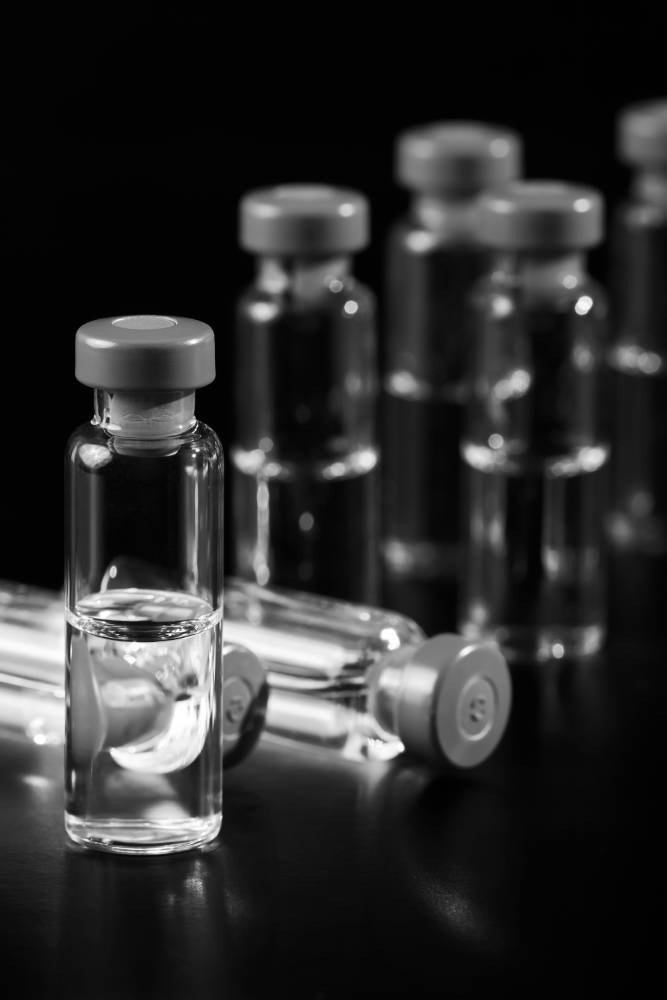
Reconstituting peptides involves diluting a lyophilized (freeze-dried) powder into a liquid solution using precise sterile technique and accurate dosage calculations.
Safety & Handling Notice
Always sanitize all surfaces, vial tops, and hands with 70% isopropyl alcohol before handling. Handle peptide solutions gently—do not shake the vial, as vigorous agitation can degrade delicate peptide bonds.
Gather Equipment & Sanitize
Prerequisite
Collect your lyophilized peptide vial, bacteriostatic water (BAC), alcohol wipes, a mixing syringe (3 mL or 5 mL with a 21G–25G needle), and a small injection syringe (0.5 mL or 1 mL U-100 insulin syringe). Thoroughly wipe down your workspace and wipe the rubber stoppers of both the BAC water and peptide vials.
Draw Bacteriostatic Water
Sterile transfer
Draw air into your mixing syringe equal to the volume of liquid you plan to extract (e.g., 2 mL). Inject this air into the BAC water vial to equalize pressure, flip the vial upside down, and pull back the plunger to extract your measured volume of water.
Inject Water Into Peptide Vial
Gentle mixing
Insert the mixing needle through the center of the peptide vial’s rubber stopper. Direct the needle tip toward the inner glass wall so the liquid slowly drips down the side rather than splashing directly onto the powder. Slowly depress the plunger, then release the vacuum if necessary by drawing back a small amount of excess air.
Dissolve Solution Completely
Do not shake
Allow the liquid to sit for a few minutes. Gently roll the vial between your palms until the powder fully dissolves into a completely clear liquid. Inspect the solution: if it appears cloudy, clumped, or discolored after several minutes, do not use it.
Store Appropriately
Temperature sensitive
Label the vial with the reconstituted date and dose concentration. Store the solution immediately in the refrigerator (typically 2°C–8°C / 36°F–46°F), away from direct light. Most reconstituted peptides remain stable in the refrigerator for 28 to 30 days.
Calculating Dosage Concentration
To calculate your dose, determine how many milligrams (mg) or micrograms (mcg) of peptide are dissolved per unit on your insulin syringe:
Common Reconstitution Dosing Examples (Using a Standard 100-Unit / 1 mL Insulin Syringe):
| Peptide Vial Size | BAC Water Added | Concentration per mL | Target Dose | Syringe Volume (U-100) |
| 5 mg (5,000 mcg) | 2.0 mL | 2,500 mcg / mL | 250 mcg | 10 Units (0.1 mL) |
| 5 mg (5,000 mcg) | 2.0 mL | 2,500 mcg / mL | 500 mcg | 20 Units (0.2 mL) |
| 10 mg (10,000 mcg) | 2.0 mL | 5,000 mcg / mL | 500 mcg | 10 Units (0.1 mL) |
| 10 mg (10,000 mcg) | 2.0 mL | 5,000 mcg / mL | 1,000 mcg (1 mg) | 20 Units (0.2 mL) |